Home / Guides / Tracker vs immobiliser
Compare · prevention and recovery
One helps you get the car back. The other stops it leaving.
Most drivers who worry about theft buy a tracker, because trackers are visible, easy to understand and heavily marketed. Very few buy an immobiliser. Given how the numbers work, that is almost exactly the wrong way round.
Two products, two entirely different jobs
An immobiliser is a preventive device. It sits between the thief and a working engine, and its success condition is that your car is still on the driveway in the morning.
A tracker is a recovery device. It does nothing whatsoever to stop a theft. Its success condition is that after your car has been taken, you or the police can find it. These are not competing products. They are different stages of the same bad night.
A tracker is not car security. It is theft insurance with a location feature. Useful, sometimes essential — but if you only buy one thing, buying the one that reacts rather than the one that prevents is a strange order of priorities.
What the numbers say about recovery
The figure most owners have never seen: analyses of national return-rate data suggest roughly two thirds of stolen vehicles in the UK are never recovered. Not damaged, not stripped — never returned at all.
That is not because trackers do not work. It is because of what happens after a theft. Organised teams routinely leave a stolen car parked in an ordinary street for a day or two, watching to see whether anyone comes for it. If nothing happens, it moves. Before that, it gets checked for tracking hardware, and the more valuable the car, the more thorough that check. A vehicle can also be moved inside a metal container or a van, where nothing transmits.
Where trackers genuinely earn their money is in the first hour, on a car that was driven away and has not yet been examined — and on high-value vehicles where a monitored recovery service can involve police quickly. That is a real and worthwhile scenario. It is just narrower than the marketing implies.
What a tracker is genuinely good at
- High-value vehicles where an insurer requires a Thatcham S5 or S7 device as a condition of cover. In that case the decision is already made for you.
- Fleets and vans, where you want location data for operational reasons anyway and theft protection is a bonus.
- Cars stolen by being towed, which no immobiliser can prevent. If the car cannot be driven, a trailer is the remaining method, and a tracker is the only thing that helps afterwards.
- Peace of mind for owners who want to be able to look at a map. That is a legitimate thing to buy.
Its weaknesses are worth stating too: a subscription that runs for as long as you own the car, dependence on mobile network coverage, vulnerability to jammers and to being found and removed, and the fact that by the time it is useful, your car has already been stolen.
What an immobiliser is genuinely good at
- Every drive-away method. Relay attack, key cloning, OBD key programming, CAN injection — all of them end at the same wall, because none of them can produce the credential a second immobiliser wants.
- Working silently and permanently. No network, no SIM, no server, no subscription, nothing to renew and nothing to forget.
- Being invisible. A thief who cannot find the module cannot bypass it, and the module has no fixed location to look in.
- Costing once. A one-off price that does not grow every month for the next five years.
Its limitations, equally plainly: it cannot stop a car being lifted onto a truck, it cannot stop theft of contents or parts, and it does not help you find the car if it does go. How the technology works →
When you want both
For a genuinely high-value car, or one in a high-theft area, the combination is the right answer, and the order is important: immobiliser first, tracker second. Prevention removes the fast, quiet, low-risk method. Recovery covers the slow, noisy, high-effort one that remains.
If the combination is out of budget, an immobiliser alone will prevent more thefts than a tracker alone will recover from. If your insurer mandates a tracker, fit the tracker — then add the immobiliser when you can, because the mandate protects the insurer's exposure, not your morning.
A short decision guide
Buy the immobiliser first if
Your car is keyless, or it appears on the most-stolen lists, or you park on a street or open driveway, or you simply want your car to still be there tomorrow. This is most people.
Buy the tracker first if
Your insurer requires one, or your vehicle is valuable enough that professional recovery is worth a permanent subscription, or you need location data for work.
Buy both if
Your car is worth more than around twenty thousand pounds, or you have already been targeted once, or you live somewhere the same models keep disappearing. Check whether yours is one of them →
Questions we get asked
Can thieves detect a GPS tracker?
Sophisticated teams look for them, and detection equipment exists. Hard-wired units hidden in an unusual location are considerably harder to find than a self-install unit plugged into the OBD port, but nothing is guaranteed. Signal jammers are also used to prevent a unit reporting its position.
Do I still need a tracker if I have an immobiliser?
It depends on the value of the car and the risk of it being towed. An immobiliser removes the drive-away methods, which are the vast majority. A tracker covers what remains. For a high-value vehicle, have both.
Does LockCar CAN-IMMO include tracking?
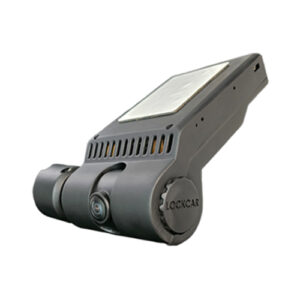
No. CAN-IMMO is strictly an engine start block, which is why it has no subscription. There are separate LockCar configurations with GPS, 4G camera and remote access if tracking is what you need — ask us and we will explain the options.
Will my insurance company accept a self-monitored tracker?
Often not, where a tracker is a condition of cover. Insurers usually specify a Thatcham-categorised device with a monitored recovery service. Check the exact wording of what they require before buying anything.
What actually happens if my car is stolen and I have a tracker?
With a monitored service, you call them, they locate the vehicle and coordinate with police. With a self-monitored unit you report the theft and pass the location to the police yourself — and you should never go and confront anyone in person.
Get the prevention layer in place first
An immobiliser is a one-off cost with no subscription, and it is the only layer that stops the theft rather than reacting to it.
Get a quote for your carLockCar · 06 modules · built in the UK
The full LockCar range
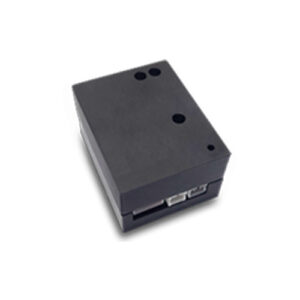
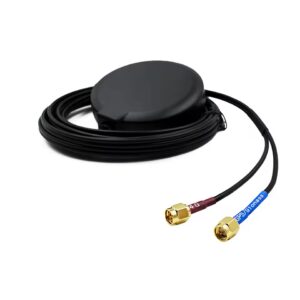
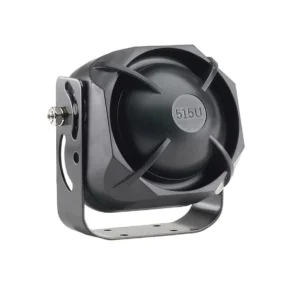
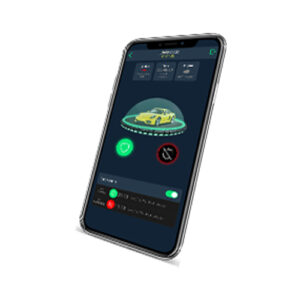
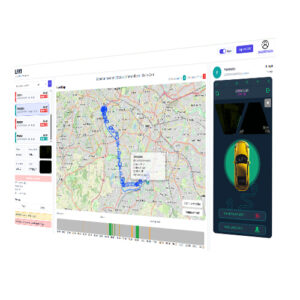
Visit the shop →CAN-IMMO is one module in a wider system. LockCar also builds trackers, 4G cameras, alarms, apps and fleet monitoring — and we fit and support all of them.
Category pages open on lockcar.co.uk — the manufacturer's shop
Autowatch and Ghost are trademarks of Autowatch Ltd. IGLA is a trademark of AUTHOR Ltd. LockCar is a trademark of its manufacturer. 5StarWin is not affiliated with, endorsed by or acting on behalf of Autowatch or AUTHOR. Comparisons on this page are based on publicly published manufacturer and installer information available in August 2026 and on our own fitting experience; specifications, approvals and prices change, so please confirm current details with each supplier before you decide. Nothing here is insurance advice — always tell your insurer about any security device fitted to your vehicle.