A second question your car asks before it will start.
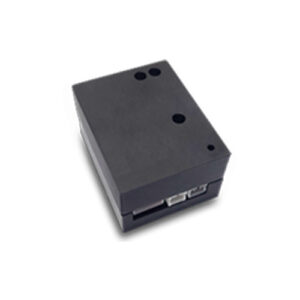
A CAN bus immobiliser is a small module that joins your car's data network, keeps the engine blocked by default, and releases the block only when you personally authorise it. No cut wires, nothing on the dashboard, and no relationship whatsoever with your key.
Reading time: 8 minUpdated: August 2026Written by the 5StarWin fitting team
Two immobilisers, two different questions
Your car already has an immobiliser. It has been mandatory on new cars in the UK since 1998, it lives inside the vehicle's own electronics, and it asks one question: is a valid key present? It answers that question well. The problem, as every modern theft method demonstrates, is that the question itself is the weakness. A relayed signal, a cloned transponder or an injected message can all answer "yes" without you being anywhere near the car.
An aftermarket CAN bus immobiliser adds a second question, in series with the first: has the owner authorised this start? Both have to be answered before the engine will run. The two are deliberately unrelated — different hardware, different credential, different communication channel — so a technique that forges one has no purchase on the other.
Why "in series" is the whole idea
If the two checks were alternatives, defeating either one would be enough. Because they are in series, a thief must defeat both, using two entirely different attacks, on a car they cannot examine at leisure. In practice they move to a different car.
Digital blocking versus cutting a wire
Older aftermarket immobilisers worked physically. A relay was spliced into the starter feed, the fuel pump circuit or the ignition, and when armed it opened the circuit. Effective in 1995. The trouble is that a physical interruption leaves physical evidence: a wire that goes somewhere it should not, a relay that clicks when the car is armed, and a defeat method that consists of finding the relay and bridging it.
A CAN bus immobiliser does not interrupt anything. It joins the car's data network — CAN, and on some vehicles the slower LIN bus or an analogue ADC input — and blocks the start digitally, by communicating with the vehicle's own control units. There is no spliced wire in the starter circuit to find. There is no click. On a diagnostic scan there is no obvious foreign device announcing itself.
It also means the module can be mounted almost anywhere the loom runs, rather than at one specific circuit. That freedom is a security feature in itself: with no fixed location, a thief cannot arrive knowing where to look.
The three ways to authorise a start
Every system in this category uses one or more of these three. The differences between products are mostly differences here.
PIN on the car's own buttons
You press an agreed sequence on controls the car already has — steering wheel buttons, window switches, brake pedal. Nothing to carry and nothing to lose. The cost is that you enter it every single time, and long sequences become tiresome.
Proximity tag
A small Bluetooth fob in your pocket authorises automatically as you approach. Nothing to press. The cost is that it is another object to keep track of, and it must be kept away from the car when the car is left.
Paired smartphone
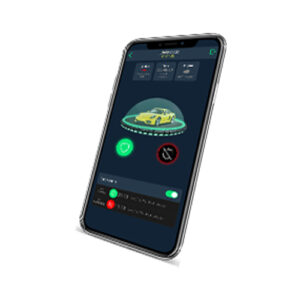
Your phone authorises over an encrypted Bluetooth link. You already carry it, it can show system status, change modes and take firmware updates. The cost is a dependency on a charged phone — which is why a backup method is essential.
LockCar CAN-IMMO uses the phone as the primary credential, with an optional proximity tag for hands-free use, and a backup sequence on the car's existing buttons that is configured with you at fitting. That backup matters more than it sounds. A system with only one credential has a single point of failure, and it will find you in a supermarket car park with a dead phone.
What it actually feels like to live with
This is the part sales pages skip, and it is the part that determines whether a system is still protecting your car in two years' time.
With hands-free authorisation enabled, the honest answer is that you notice nothing. You walk up with your phone or tag in your pocket, the module recognises it, the block lifts, and the car starts the way it always did. When you walk away, it arms itself again. No app to open, no button to press, no sequence to remember.
Without hands-free — either because you have turned it off for stronger security, or because you are using a PIN system — you perform a short action every time you start the car. Five presses is fine. Twenty is a system you will eventually be tempted to disable, and a disabled immobiliser protects nothing.
The features that actually matter
Service and valet mode
Temporarily suspends protection so a garage, MOT centre or car park attendant can move the car without ever learning your credential. Switch it on at handover, off when the car comes back. Any system without this will drive you mad within a year.
Anti-hijack
If the authorised credential is no longer present while the car is moving, the system responds according to how your installer configured it. The point is that handing over your keys under threat does not hand over the car — but the behaviour must be set up sensibly and safely, and you should have it explained to you at fitting.
Shock and tilt sensing
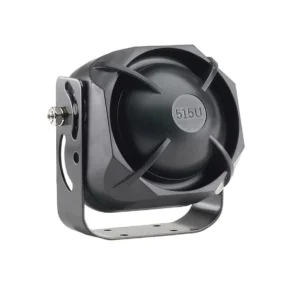
A shock sensor input detects impact or the car being lifted for towing, which is the attack no immobiliser can prevent on its own. Being able to silence it temporarily — car wash, ferry, trailer — is a practical necessity.
Updates and reprogramming
Vehicle protocols change and security research moves. A module that takes firmware updates over the air, through the app, will still be current in three years. A module that can be reprogrammed to a different vehicle keeps its value when you change car.
No mandatory subscription
An immobiliser that works over a local Bluetooth link needs no server, no SIM and no monthly fee. Be clear about which parts of any system depend on a subscription, and what stops working when you cancel it.
Fitting: the part that decides how good your security is
Two identical modules fitted by two different people are not equally secure. The hardware is roughly half of it; the fitting is the rest.
Concealment. If the module sits in the first place anyone would look, its main advantage is gone. Ask where it will go and why.
Connections. A proper installation is soldered and insulated, not scotch-locked. Connections that vibrate loose in eighteen months create electrical faults that get blamed on the car.
Vehicle-specific programming. The module has to be told what it is fitted to. The same box behaves differently on different platforms.
Handover. You should leave having personally tested the block, hands-free disarm, valet mode and the backup sequence. If nobody made you do that, it was not a handover.
It typically takes one to three hours depending on the vehicle, and it is not a driveway job — it requires soldering and knowledge of that model's wiring. See our fitting process step by step →
Questions we get asked
Will it drain my battery if the car sits for a few weeks?
A well designed module draws very little current while armed, specifically so that it does not flatten a battery on a car that is not used daily. If you store a car for months, a trickle charger is sensible regardless of what is fitted — modern cars have plenty of their own standby loads.
Can it be found with a diagnostic scanner?
It does not present itself as a standard diagnostic device, and it is not spliced into an obvious circuit. Nothing is undetectable to someone with unlimited time and the car on a ramp, but a thief working in a street with a torch is a very different situation.
Does it affect my manufacturer warranty?
A properly fitted device that does not damage the vehicle or cause a fault should not affect a warranty claim on unrelated components. Poor fitting can and does cause problems, which is the real reason to use someone who fits these regularly on your make of car.
What if I sell the car?
Either hand it over as a selling point and transfer the app access, or have the module removed and reprogrammed for your next vehicle. Decide before the sale, not on the day.
Can more than one driver use the car?
Yes. Additional phones or proximity tags can be paired. Tell the installer how many drivers there are at fitting so it is configured properly from the start.
See it working before you decide
Flip the switch on our homepage demo to watch what changes when authorisation is present, then send us your registration for a compatibility check.
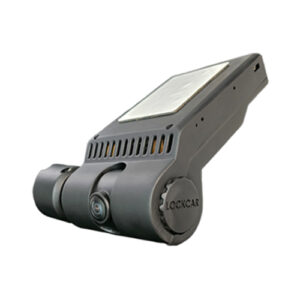
CAN-IMMO is one module in a wider system. LockCar also builds trackers, 4G cameras, alarms, apps and fleet monitoring — and we fit and support all of them.
Autowatch and Ghost are trademarks of Autowatch Ltd. IGLA is a trademark of AUTHOR Ltd. LockCar is a trademark of its manufacturer. 5StarWin is not affiliated with, endorsed by or acting on behalf of Autowatch or AUTHOR. Comparisons on this page are based on publicly published manufacturer and installer information available in August 2026 and on our own fitting experience; specifications, approvals and prices change, so please confirm current details with each supplier before you decide. Nothing here is insurance advice — always tell your insurer about any security device fitted to your vehicle.