Money · prices and running costs
What car security actually costs.
Headline prices are the least useful number in this industry. A cheap box with a monthly fee costs more over three years than an expensive one without. Here is what each category really costs in the UK in 2026, including the parts nobody puts on the price list.
What each category costs in the UK
Figures below are typical fitted or retail prices as at August 2026. Anyone quoting you a fixed national price for a fitted product without asking what you drive is guessing.
| Category | Typical UK price | Ongoing cost | What it actually does |
|---|---|---|---|
| Signal-blocking pouch | £8–£25 | Replace every year or two | Stops relay attacks while the key is genuinely inside it |
| Steering wheel lock | £35–£150 | None | Visible deterrent, adds time and noise |
| OBD port lock | £40–£120 fitted | None | Blocks one access point for key programming |
| Pedal box or wheel clamp | £150–£400 | None | Strong physical barrier, inconvenient daily |
| Thatcham Cat 1 alarm & immobiliser | £350–£800 fitted | None | Alarm plus conventional immobiliser, insurer-recognised |
| CAN bus immobiliser, premium brands | £449–£599 fitted | None | Digital engine block, PIN or tag authorisation |
| LockCar CAN-IMMO | from £199 fitted | None | Digital engine block, phone or tag authorisation |
| Self-monitored GPS tracker | £60–£200 | £3–£10 a month | Shows you a location; you do the chasing |
| Thatcham S5/S7 tracker with recovery | £250–£700 fitted | £15–£30 a month | Monitored recovery service, often required by insurers on high-value cars |
Scroll the table sideways to see every column.
What actually drives the fitting cost
When an installer says "from", the variation is real and it comes from a short list of things.
- How much trim has to come off. Some cars give up their dashboard in fifteen minutes. Others require patience, specialist clips and a level of care that costs labour time. Premium German saloons and modern SUVs are usually at the slower end.
- Where the module can be hidden. A good concealment point may be a long way from the easiest wiring access. Doing it properly takes longer than doing it conveniently.
- Bus architecture. Newer vehicles with gateway-segmented networks need the module connected at a particular point, which may be harder to reach.
- Options. A proximity tag, a shock sensor, additional paired phones — each adds parts and setup time.
- Mobile versus workshop. Fitting at your home or workplace costs the installer travel and daylight, and that is usually reflected somewhere.
The quality of the wiring. Soldered and insulated connections, correct fusing, and a proper handover test are not an upgrade tier. If an installer's cheaper option involves cutting corners on any of those, it is not cheaper — it is a future electrical fault you will pay a franchised dealer to diagnose.
The five-year picture
Subscription costs are where budgets quietly break. Here is what a realistic five years looks like for four common setups.
| Setup | Up front | Monthly | Total after 5 years |
|---|---|---|---|
| Steering lock only | £80 | — | £80 |
| LockCar CAN-IMMO | £199 | — | £199 |
| Premium CAN immobiliser | £499 | — | £499 |
| Monitored tracker only | £350 | £20 | £1,550 |
| LockCar + monitored tracker | £549 | £20 | £1,749 |
The lesson is not that trackers are bad value — for a high-value car that gets lifted onto a trailer, a monitored recovery service earns its money the one time you need it. The lesson is that a monthly fee is a purchase decision, not a rounding error, and it should be compared against a one-off cost over the whole period you will own the car.
The insurance question, answered honestly
You will see a lot of confident claims about immobilisers cutting premiums. The reality is less tidy.
- Some insurers do give a discount for an accredited aftermarket immobiliser, typically in the region of five to fifteen percent, but it is not universal and it varies by vehicle and postcode.
- Some require a device rather than rewarding it. On high-value or high-theft models an insurer may make cover conditional on a tracker or an accredited immobiliser being fitted. In that case the device is not saving you money, it is making cover available at all.
- Accreditation matters to insurers more than technology does. Schemes such as Thatcham categories and TASSA registration exist precisely so an underwriter has something to point at. A technically excellent device with no accreditation may earn you nothing on the premium, even though it protects the car just as well.
- Declare everything. Any security device is a modification. Undeclared modifications are the sort of detail that becomes important at exactly the wrong moment.
Phone your insurer and ask two questions in these words: "Do you offer a discount for an aftermarket immobiliser?" and "Does it need to be TASSA registered or Thatcham categorised to qualify?" Five minutes on the phone tells you whether accreditation is worth paying for in your specific case. If the answer is no, buying it is buying a badge.
Where the money is best spent
Under £250 total
A signal-blocking pouch, a decent steering lock and sensible key habits. Then, if the budget stretches, a CAN bus immobiliser is the single highest-value item you can add — it is the only thing on the list that changes the outcome rather than the odds.
£250 to £600
A properly fitted CAN bus immobiliser with a proximity tag, plus an OBD port lock and a steering lock. This is the sweet spot for the great majority of owners, and it covers every electronic attack in common use.
£600 to £1,500
Add a monitored tracker on top of the immobiliser. At this level you are covering both prevention and recovery, which is the correct approach for a high-value car or a high-theft postcode.
Above that
Bonnet locks, secondary blocks, a driveway barrier or post, and a serious look at where the car sleeps. At some point the most cost-effective security upgrade stops being electronic and becomes a locked gate.
Six questions to ask before you pay anyone
- Is this price fitted, and is it fixed for my specific vehicle?
- Where exactly will the module be hidden, and why there?
- Are connections soldered, and is the work guaranteed?
- What is my fallback if the phone, tag or PIN is unavailable?
- What happens if I sell the car — can it be removed and reused?
- Is there anything at all that requires a subscription, now or later?
Questions we get asked
Why is your fitted price so much lower than the big brands?
Three reasons, and none of them is the quality of the block. We fit directly rather than through a national distributor and approved-installer network, we are not carrying the marketing spend of a household name, and we do not hold a certification whose cost sits in every retail price. What you get for the difference is the same category of digital engine blocking.
Does a car immobiliser reduce my insurance premium?
Sometimes, typically in the five to fifteen percent range, and mainly where the device carries an accreditation the insurer recognises. It varies enormously by insurer, vehicle and postcode, so the only reliable way to find out is to ask yours directly before you buy.
Is a tracker cheaper than an immobiliser?
Up front it can be. Over five years it is usually far more expensive because of the monitoring subscription, and it does a different job — it improves recovery odds rather than preventing the theft.
Can I fit an immobiliser myself to save money?
We would not recommend it. Fitting requires soldering, knowledge of that specific model's wiring, and vehicle programming, and a poorly hidden or poorly wired module gives you a false sense of security plus a potential electrical fault. The fitting is a substantial part of what makes the system work.
Do you charge extra for a mobile fitting?
Tell us your location when you ask for a quote and we will confirm exactly what is included. The price we give you is the price you pay — nothing is added on the day.
A fixed quote, before you commit
Send us your make, model and year and we will give you the fitted price for your car — including any options — with nothing added on the day.
Get a quote for your carLockCar · 06 modules · built in the UK
The full LockCar range
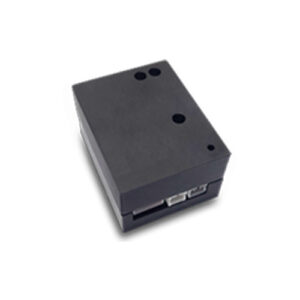
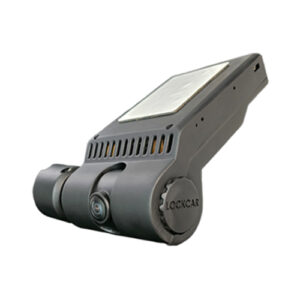
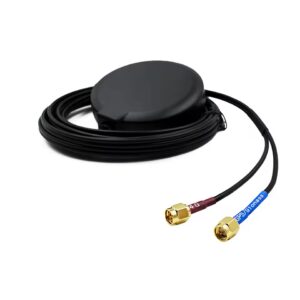
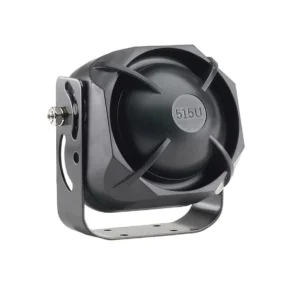
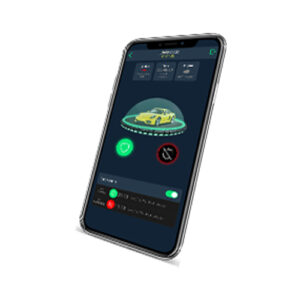
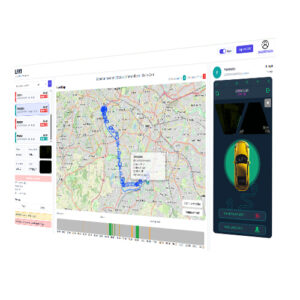
Visit the shop →CAN-IMMO is one module in a wider system. LockCar also builds trackers, 4G cameras, alarms, apps and fleet monitoring — and we fit and support all of them.
Category pages open on lockcar.co.uk — the manufacturer's shop
Autowatch and Ghost are trademarks of Autowatch Ltd. IGLA is a trademark of AUTHOR Ltd. LockCar is a trademark of its manufacturer. 5StarWin is not affiliated with, endorsed by or acting on behalf of Autowatch or AUTHOR. Comparisons on this page are based on publicly published manufacturer and installer information available in August 2026 and on our own fitting experience; specifications, approvals and prices change, so please confirm current details with each supplier before you decide. Nothing here is insurance advice — always tell your insurer about any security device fitted to your vehicle.