Home / Guides / LockCar vs Ghost vs IGLA
Compare · three CAN immobilisers
LockCar, Ghost and IGLA, side by side.
These three systems do the same fundamental job: they block the engine digitally over the car's data network and demand an authorisation your key cannot provide. Where they differ is how you authorise, what you carry, what happens on a bad day, and what you pay. Here is the comparison without the sales gloss.
What all three have in common
Start with the agreement, because it is substantial. All three are aftermarket immobilisers that block the engine through the vehicle's own data network rather than by cutting into a circuit. All three are hidden, with no LED, no keypad and nothing visible on the dashboard. None of them relies on a radio key fob that can be relayed or cloned. All three defeat relay attacks, key cloning and OBD key programming for the same structural reason: the credential they want is not a key.
If you fit any of the three competently, you have dealt with the overwhelming majority of the ways a modern car is stolen. Anyone telling you that one of them is protection and the other two are toys is selling something.
The comparison table
Scroll the table sideways to see all three columns.
| LockCar CAN-IMMO | Autowatch Ghost II | IGLA | |
|---|---|---|---|
| Blocking method | Digital, over CAN / LIN / ADC | Digital, over CAN | Digital, over CAN / LIN, plus an analogue relay output on some versions |
| Primary authorisation | Paired smartphone over encrypted Bluetooth | PIN sequence on the car's existing buttons | PIN sequence on the car's existing buttons |
| Hands-free option | Yes — phone in pocket, or optional proximity tag | Optional smartphone pairing on supported versions | Yes — Bluetooth tags, commonly two in the box, plus app |
| Backup if the phone dies | Sequence on the car's existing buttons, set up at fitting | The PIN is the primary method, so no phone dependency | PIN sequence, plus an emergency code |
| Anti-hijack | Yes, installer configured | Available depending on version and configuration | Yes, including a speed-aware block |
| Service / valet mode | Yes | Yes | Yes |
| Shock / tilt sensor input | Yes, optional sensor | Not a core feature | Available through add-on modules |
| Firmware updates | Over the air, through the app | Typically at an installer | Typically at an installer, some versions via app |
| Mandatory subscription | None | None | None |
| Module size | 48 × 24 × 15 mm | Very small, designed to be wrapped into the loom | Ultra compact |
| Moves to your next car | Yes, reprogrammable | Possible via an installer, subject to compatibility | Possible via an installer, subject to compatibility |
| Typical UK price, fitted | from £199 | commonly around £449–£599 depending on version and vehicle | varies widely by installer and market; generally quoted in the premium bracket |
| Insurance recognition | Ask us about your specific insurer before booking | TASSA verified, which some UK insurers recognise | Recognised by a number of insurers in certain markets; varies by country |
| Warranty | 12 months | Varies by installer, often 2 years | Varies by installer |
Prices and specifications were checked against publicly published manufacturer and installer information in August 2026. All three products have multiple versions and vehicle-dependent feature sets, so confirm the current detail for your exact vehicle with each supplier before you decide.
Autowatch Ghost II — the one everyone has heard of
Ghost is the product that created public awareness of this category in Britain, and it deserves credit for that. It is well made, very widely fitted, and there is an installer within reach of almost anyone in the UK.
What it does well. The PIN-on-existing-buttons approach means there is nothing to carry, nothing to charge and nothing to lose. It is TASSA verified, which is genuinely useful if your insurer asks about accreditation. And its ubiquity means service and support are easy to find.
Where owners push back. Two things come up repeatedly. The first is the daily routine: you enter a sequence — anywhere from four to twenty button presses — every time you start the car, and while owners adapt, plenty find it wearing, particularly on short multi-stop journeys. The second is price. A fitted Ghost is commonly quoted around £499, with some vehicles requiring a higher-specification version at around £599.
IGLA — the feature-rich one
IGLA, made by AUTHOR, comes from a market where organised vehicle theft has been an industrial-scale problem for far longer than in Britain, and the product shows it. It is arguably the most feature-dense of the three.
What it does well. Multiple authorisation methods in one system: PIN on the car's own buttons, Bluetooth tags, and a smartphone app. It offers an anti-carjacking mode that blocks the engine at a safe speed, blocking of key reprogramming, service mode, and an ecosystem of add-on modules for hood locks, GSM and comfort features. Owners who like to configure things tend to like IGLA a lot.
Where owners push back. Complexity and cost. Feature depth means more configuration decisions, and the quality of your installation depends heavily on the installer understanding all of it. UK pricing varies considerably between installers, and the wider ecosystem — extra modules, extra fitting time — adds up quickly.
LockCar CAN-IMMO — the phone-first one
LockCar approaches the same problem from the other end. Instead of asking you to remember and enter something, it authorises against the object you already carry everywhere and never forget.
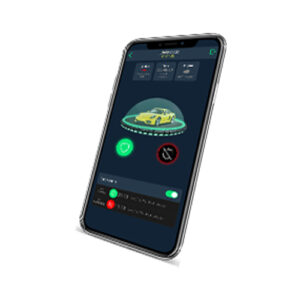
What it does well. The daily experience is the strongest argument. With the phone or optional proximity tag in your pocket, there is nothing to do at all — you get in and start the car, exactly as before. The app gives you visible status, mode switching and over-the-air firmware updates, which means the module you buy today can be improved without a trip to a workshop. It works on CAN, LIN or ADC, it includes anti-hijack, a shock sensor input and valet mode, and it is reprogrammable to a different vehicle when you change car. There is no subscription of any kind.
Where you should think carefully. A phone-first system means a phone dependency, which is why the backup sequence on the car's own buttons is set up during fitting and why we insist on testing it with you before you drive away. And on accreditation: if your insurer specifically requires a TASSA-verified or Thatcham-listed device to give you a discount, tell us before you book — we would rather have that conversation first than have you discover it afterwards.
If you want a PIN-based system with the widest UK installer network and TASSA verification, Ghost is a good product and we will say so. If you want the deepest feature set and are happy to pay for configuration, IGLA is excellent. If you want the same class of protection with nothing to remember, nothing to enter, and a fitted price that starts at roughly a third of the alternatives, that is where LockCar sits.
Why the price gap is as big as it is
A reasonable person seeing £199 next to £499 assumes something is missing. Usually that instinct is right, so here is the honest accounting.
- Brand and marketing. A significant part of a premium immobiliser's price is the cost of being the name people already know. That buys you reassurance. It does not buy you a better block.
- Distribution layers. The established products move through national distributors and approved-installer networks, each of which takes margin. We buy and fit directly.
- Accreditation. Certification schemes cost money to obtain and maintain, and that cost is in the retail price. If your insurer rewards accreditation, you are buying something real. If it does not, you are paying for a badge that changes nothing about your car's security.
- What genuinely differs. Installer network size, warranty length, and the exact feature mix. These are real differences and you should weigh them.
- What does not differ. The underlying principle. All three block the engine over the vehicle's data bus and demand a credential a thief cannot forge with a relay box, a key programmer or an injected frame.
Our fitted price starts at £199 and moves with the vehicle and the options you choose. The full cost breakdown is here →
Which one, for which owner
Choose Ghost if
Your insurer explicitly asks for TASSA verification, you actively prefer having nothing at all to carry, and the £499-ish price is comfortable for you.
Choose IGLA if
You want the maximum feature depth, you value the anti-carjacking behaviour specifically, and you have found an installer who clearly knows the platform well.
Choose LockCar CAN-IMMO if
You want the same category of protection without a daily sequence to enter, you like being able to see and control the system from your phone, you want firmware updates without visiting a workshop, and you would rather spend the difference on something else — or on a second layer such as a tracker or a bonnet lock.
Choose none of them if
Your car has no CAN bus, which in practice means quite old vehicles. In that case a conventional Thatcham-rated immobiliser or a good mechanical lock is the right conversation, and we will tell you so rather than sell you a module that does not fit.
Questions we get asked
Is a cheaper immobiliser automatically less secure?
Not automatically, no. What matters is where the block happens, whether the credential can be forged, and how well the unit is hidden and fitted. Price reflects brand, distribution and certification as much as engineering. What you should never economise on is the fitting itself.
Does the Ghost immobiliser have an app?
Ghost's core method is a PIN entered on the vehicle's own buttons, and smartphone pairing is available on supported versions. Confirm with an Autowatch installer whether it is available for your specific vehicle and version, as the feature set varies.
Which of the three is best against relay attacks?
All three are effective, because none of them accepts the key as the credential. A relayed key gets a thief past the factory immobiliser and no further, whichever of these is fitted.
Can I have both an immobiliser and a tracker?
Yes, and for a high-value or high-risk car it is the sensible combination. The immobiliser prevents the theft; the tracker improves your odds if the car is taken on a trailer. They solve different problems.
Will any of these systems stop my car being towed away?
No immobiliser can prevent a car being lifted onto a truck. What it does mean is that the car cannot be driven, which rules out the fast, quiet, low-risk method thieves prefer. A shock and tilt sensor gives you a warning that the car is being moved.
Want the version that applies to your car?
Send us the make, model and year. We will tell you which of these are compatible with it, what each would cost you fitted, and which one we would actually recommend.
Get a quote for your carLockCar · 06 modules · built in the UK
The full LockCar range
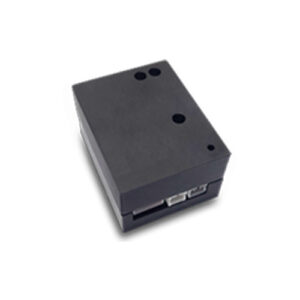
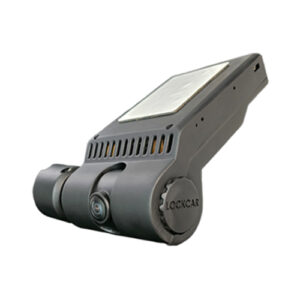
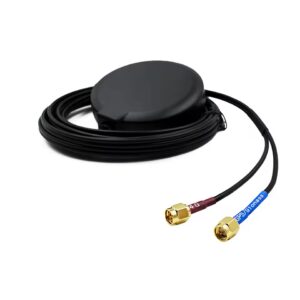
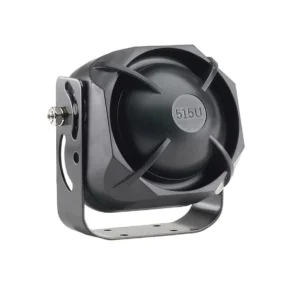
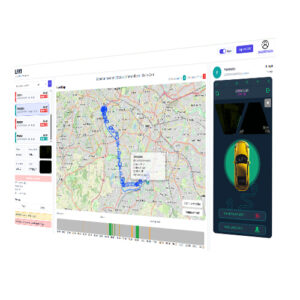
Visit the shop →CAN-IMMO is one module in a wider system. LockCar also builds trackers, 4G cameras, alarms, apps and fleet monitoring — and we fit and support all of them.
Category pages open on lockcar.co.uk — the manufacturer's shop
Autowatch and Ghost are trademarks of Autowatch Ltd. IGLA is a trademark of AUTHOR Ltd. LockCar is a trademark of its manufacturer. 5StarWin is not affiliated with, endorsed by or acting on behalf of Autowatch or AUTHOR. Comparisons on this page are based on publicly published manufacturer and installer information available in August 2026 and on our own fitting experience; specifications, approvals and prices change, so please confirm current details with each supplier before you decide. Nothing here is insurance advice — always tell your insurer about any security device fitted to your vehicle.