Home / Guides / Most stolen cars
Data · UK theft picture
If your car is on this list, read the last section.
Theft is not random and it is not evenly spread. A small number of models, in a small number of postcodes, account for a disproportionate share of everything stolen in Britain. Here is what the most recent DVLA and police data shows, and what it means for what you should fit.
The scale of it
Depending on the dataset and how a "car" is counted, DVLA figures analysed by the motoring press put UK car thefts in 2025 somewhere between roughly 54,000 and 61,000 vehicles. Broadly speaking, that is around 150 cars a day, or one every ten minutes, every day of the year. The figure remains far above the level of a decade ago, even though overall vehicle-related crime — which includes theft of items from vehicles — has been falling.
Two trends sit underneath the headline. Theft from vehicles is down. Theft of vehicles, particularly keyless ones, is not. And published analyses consistently indicate that keyless cars are around twice as likely to be stolen as cars with a conventional key.
The models being taken
The Ford Fiesta has topped the UK theft chart for years and did so again in 2025, with DVLA data analysed by What Car? recording several thousand taken during the year — well ahead of anything else. It is not the most vulnerable car on the road; it is simply the most common, and volume is its own risk factor.
Behind it, the recurring names in recent analyses are the Volkswagen Golf, the Ford Focus, the Toyota RAV4, the BMW 3 Series, and Range Rover models — the last of which saw a substantial fall after Land Rover invested heavily in security updates for older vehicles, which is a useful demonstration that this problem responds to intervention.
Among electric vehicles, published analyses put Kia and Hyundai models such as the e-Niro, Ioniq 5 and EV6 near the top of the EV theft list, largely because of keyless entry vulnerabilities and strong second-hand demand. Tesla, despite its sales volume, barely appears, which is generally attributed to its embedded telematics and over-the-air security updates.
Why hybrids climbed the list
The most striking recent change is the rise of Toyota hybrids. Carwow's analysis of 2025 DVLA data reported that the Toyota C-HR hybrid topped the overall theft chart for the first time on a specific-variant basis, with thefts up around 28 percent on the previous year and one trim up nearly 40 percent.
There are two drivers. Hybrids carry components with high grey-market value — catalytic converters in particular, along with battery modules and high-specification electronics. And some hybrid models use keyless systems of an earlier generation than the very latest vehicles, which makes the electronic attack quicker.
Where it happens
Vehicle theft in Britain is heavily concentrated. The Metropolitan Police recorded 16,907 vehicle thefts in 2025 — roughly 46 a day in the capital alone. Beyond London, the West Midlands, Greater Manchester and other dense urban areas with a lot of on-street parking consistently appear near the top.
Concentration works both ways. If you are in one of those areas, your individual risk is materially higher than the national average suggests, and a national statistic understates your exposure. If you are not, it overstates it. Your local force publishes crime data by postcode on police.uk, and it is worth ten minutes of your evening.
Why a particular model becomes a target
- Volume on the road. A common car is easy to hide, easy to sell in parts, and easy to move without attracting attention.
- Parts demand. If there is a strong grey market for a model's components, the car does not need to be resold whole to be profitable.
- Known method. Once one team reverse-engineers a model's electronics, the knowledge becomes a saleable product. Theft of that model can go from rare to widespread in months with nothing about the car having changed.
- Export demand. Some models are worth far more abroad than here, which drives container theft where the car is never driven at all.
- Ease and speed. Anything that shortens the time on the street matters more to a thief than the value of the car.
Owners look at the list, do not see their car, and conclude they are fine. That is a mistake. These lists rank by absolute numbers, so they mostly measure how many of each model exist. A rarer car can carry a much higher risk per vehicle on the road and never appear near the top.
What to fit, by category of car
Keyless car, any value, urban area
A CAN bus immobiliser is the priority, because it neutralises relay attacks, cloning and OBD key programming in one go. Add a signal-blocking pouch and keep keys away from the front door. That combination costs less than most people's annual insurance excess.
Common model with a conventional key
Your exposure is OBD key programming and parts theft rather than relay. An immobiliser plus an OBD port lock and a visible steering lock is a strong, cheap package. More on OBD theft →
Hybrid
Everything above, plus a catalytic converter protection measure — a marking scheme, a cage or a tilt-sensing alarm. A shock and tilt sensor connected to your immobiliser gives you warning of the car being jacked up.
High-value car, or a model in the news
Immobiliser plus a monitored tracker plus, if you park outside, a physical deterrent. Assume the method for your model is already circulating and ask your dealer whether a manufacturer security update exists for your VIN — many owners have never been told one is available. How to combine the two layers →
Any car parked on a street overnight
Where the car sleeps matters more than almost anything else. Lighting, a camera pointed at the vehicle rather than the door, and a driveway post if you have the space. The cheapest security upgrade in this entire guide is parking somewhere different.
Questions we get asked
Where do these figures come from?
The model-level figures come from DVLA data, generally obtained through Freedom of Information requests and analysed by publications such as What Car? and Carwow, with regional numbers from individual police forces including the Metropolitan Police. Different analyses count slightly differently, which is why totals vary between sources.
My car is not on the list. Am I safe?
Not necessarily. These lists rank by total number stolen, which largely reflects how many of each model are on the road. A less common car can carry a higher risk per vehicle and still not appear near the top.
Are older cars safer than new ones?
They are exposed differently. Older cars avoid relay attacks but are vulnerable to OBD key programming and are attractive for parts. Published analyses have repeatedly found vehicles between five and ten years old to be the most commonly stolen age bracket.
Does living outside a city mean I do not need to worry?
It lowers your risk but does not remove it. Organised teams travel, and rural properties with visible high-value vehicles and no neighbours are attractive for exactly that reason.
Will fitting an immobiliser stop my model being targeted?
It will not change whether a thief approaches your car, but it changes what happens next. They can get in, and they cannot drive away — and once a few cars in an area behave that way, the pattern gets noticed.
Find out what your model is exposed to
Send us your make, model and year. We will tell you which attack methods apply to it and what it costs to close the gap — with no obligation.
Get a quote for your carLockCar · 06 modules · built in the UK
The full LockCar range
Visit the shop →CAN-IMMO is one module in a wider system. LockCar also builds trackers, 4G cameras, alarms, apps and fleet monitoring — and we fit and support all of them.
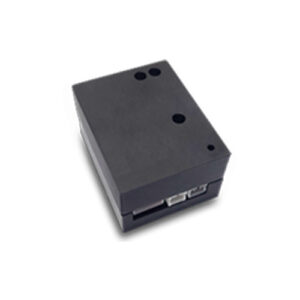
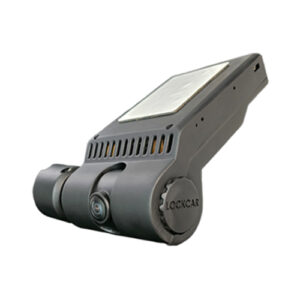
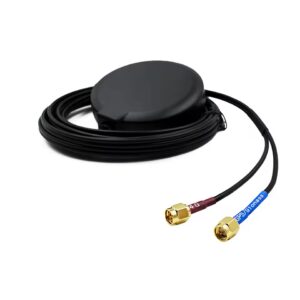
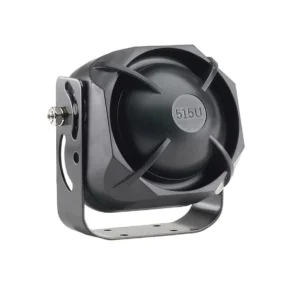

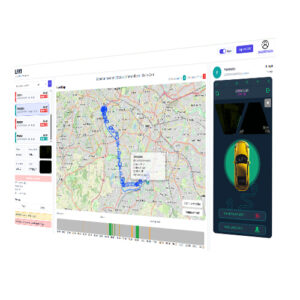
Category pages open on lockcar.co.uk — the manufacturer's shop
Autowatch and Ghost are trademarks of Autowatch Ltd. IGLA is a trademark of AUTHOR Ltd. LockCar is a trademark of its manufacturer. 5StarWin is not affiliated with, endorsed by or acting on behalf of Autowatch or AUTHOR. Comparisons on this page are based on publicly published manufacturer and installer information available in August 2026 and on our own fitting experience; specifications, approvals and prices change, so please confirm current details with each supplier before you decide. Nothing here is insurance advice — always tell your insurer about any security device fitted to your vehicle.